Why Modern Life Makes It Harder to See Clearly

A friend stood in a bookstore last month, staring at three books on productivity. Ten minutes passed. Still no decision.
Multicolored blocks on one cover—cheerful, optimistic. A bold up-arrow on another—fast progress guaranteed. Zen minimalism on the third—promising calm.
All well-reviewed. All claiming to help her work better, focus deeper, achieve more. All saying something different about what "better" even means.
She's a strategy consultant—makes million-dollar recommendations for a living. But here, faced with three different versions of clarity itself, she couldn't read which one mattered.
She bought the zen one. It's been sitting on her bedside table for three weeks now, the same five pages re-read each night before she falls asleep exhausted.
This keeps happening to capable people. Not because they lack intelligence, but because everything has started to feel equally urgent and equally unclear.
Why Clarity Has Become So Elusive
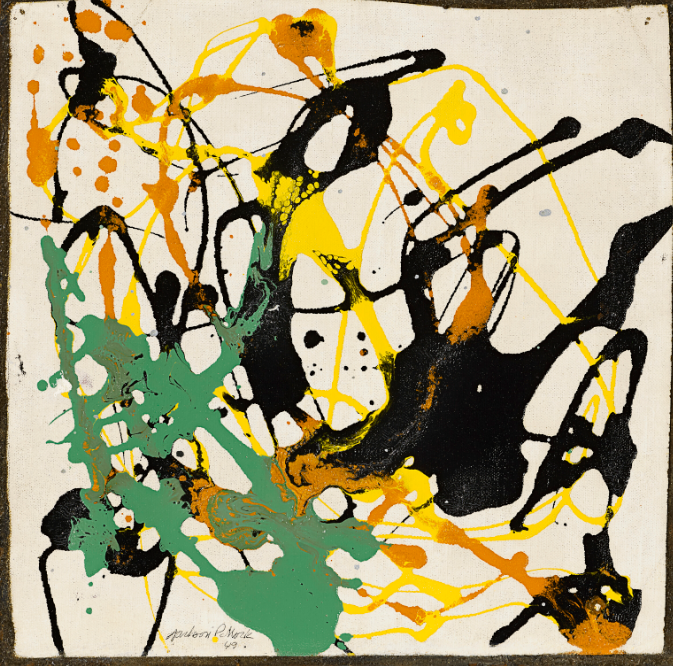
The usual diagnosis blames you: poor focus, weak discipline, not enough mindfulness. But you're not failing to see clearly. You're living inside conditions that make clarity nearly impossible.
Modern life doesn't dull intelligence. It overwhelms perception. Clarity isn't a trait you have or lack—it's a capacity that depends on environment, attention, and vantage point.
The Problem: Meaning Without Hierarchy
You're on twelve Slack channels at work. Mid-morning, you open the first one to check something specific—but there's that number. 89 unread since yesterday.
You know you're supposed to watch for @mentions, the messages actually directed at you. But reading only those means losing context—someone references a thread from another channel, a decision you weren't tagged in, and suddenly you're sitting in a meeting nodding along to something you don't understand.
So you start opening channels. One after another. The engineering team's thread about the API. The marketing channel's debate about the campaign timing. The general channel where someone's asking about expense reports and someone else is sharing a meme and someone else is... you're not sure, actually, because the thread has seventeen replies and you'd have to read all of them to find out if any of it matters.
Each channel takes something. Not much—just a small recalibration. What's this about again? What tone works here? What actually needs your attention versus what's just there?
This is meaning saturation: not too many facts, but too many interpretations layered into the same space, all demanding you figure out—right now—what actually matters. Modern systems have removed the natural hierarchy that used to help you distinguish signal from noise. Instead, you're asked to create that hierarchy yourself, constantly, while everything keeps arriving.
How Fragmented Attention Prevents Clarity
This is fragmented attention—not the dramatic kind where someone scrolls Instagram during deep work, but the constant, low-level context-switching that modern work simply requires. Your mind isn't failing to focus. It's being asked to reload context a dozen times an hour, assess what's urgent without any hierarchy to guide you, stay responsive to everything while somehow also thinking deeply about something.
Fragmented attention doesn't just reduce focus. It prevents the kind of sustained seeing that lets you recognize patterns, understand how things connect, perceive what actually matters beneath all the noise.
What Clarity Actually Requires
Clarity doesn't require more information. It requires different conditions entirely.
Think about the last time something actually became clear—not forced, not manufactured, but genuinely clear. You probably weren't in the middle of the chaos. You'd stepped back somehow. Taken a walk. Had a conversation with someone who wasn't trying to fix you. Stopped checking your phone for an afternoon.
What changed wasn't the situation. What changed was your vantage point.
What does clarity require?
Clarity isn't about having all the answers. It requires three specific conditions:
- Distance – Perceptual space between you and constant inputs
- A regulated nervous system – Enough calm to process complexity
- A stable vantage point – Somewhere to observe from that isn't caught in reaction
Modern life systematically removes all three.
Clarity requires distance—not physical distance, though a little Eat, Pray, Love never hurt anyone—but perceptual space between you and the constant stream of inputs, opinions, and other people's certainties about what you should do. It requires a regulated enough nervous system to actually process what you're seeing. You can't think clearly when you're accomplished, capable, objectively successful—and somehow still feel like you're always behind. Not because you're failing, but because chronic stress prevents your brain from stepping back far enough to see patterns. And it requires somewhere stable to stand—a vantage point that isn't swept up in urgency or reaction.

Modern life removes all three. It keeps you flooded with inputs, maintains you in chronic stress, and pulls you into constant reaction mode. The conditions that make clarity possible have quietly disappeared.
This is why capable people feel disoriented. Not because they lack intelligence, but because they're trying to see clearly from inside a system designed to prevent exactly that.
The Art of Seeing Through
Consider what happens when you look at a piece of art and stop trying to "get" it. You just observe what it's doing. What's in the foreground, what's pushed to the edges. Which colors repeat. Where your eye is drawn and why. You start seeing patterns, intentions, choices.
This same perceptual skill works on your own turning points. Step back far enough, and you notice what you're consistently drawn toward versus what you think you should want.
This is the art of seeing through—reading what's actually organizing itself in your life the same way you'd read what culture or a landscape is communicating.
Creating Vantage Points in Modern Life
Modern life will keep moving quickly. The inputs, the fragmentation, the noise—none of that is disappearing.
But clarity becomes possible when you create vantage points within it. When you practice the art of seeing through—learning to read what's actually organizing itself in your life, not just reacting to what feels urgent.
At The Vantage Room, this is what Clarity Sessions help you practice: observing what keeps surfacing, what you're consistently drawn toward, what's asking to reorganize.
When you can see your life clearly, transitions stop feeling overwhelming. They become what they are: invitations to arrange things differently.
Subscribe for essays that change how you see.